Minnesota Families Face Empty Plates as SNAP Benefits Freeze, Sparking Community Fundraiser Efforts
November 1, 2025
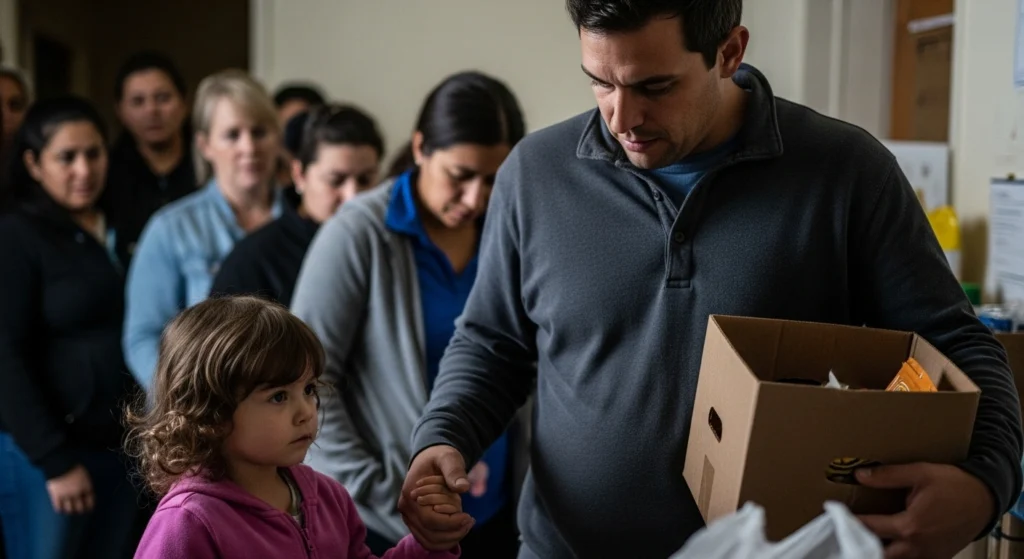
For Jamar Merritt, a father of two young children in Minnesota, today marks the beginning of a hunger crisis. His family’s food assistance benefits have run out, and his children, ages 1 and 5, are already down to two meals a day. “I am kind of worried,” Merritt confessed, standing outside a local food shelf. “I am worried for myself, my family and my community because we depend on these SNAP benefits”.
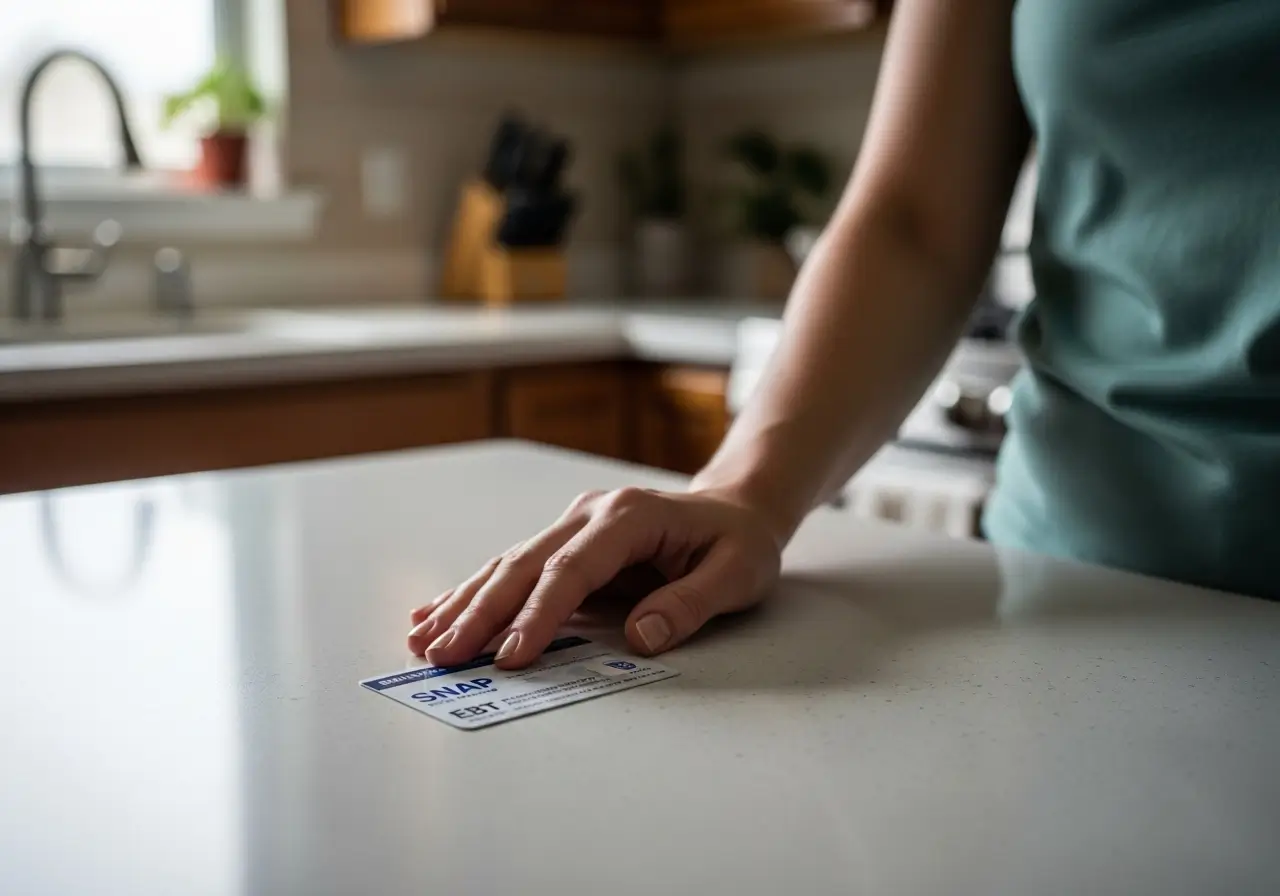
He is one of over 440,000 Minnesotans, including 180,000 children, who rely on the Supplemental Nutrition Assistance Program (SNAP) to eat . As a federal government shutdown continues into its second month, these benefits were suspended November 1, creating an unprecedented hunger emergency across the state and prompting an urgent community fundraiser response.
a dramatic last-minute development on November 1, federal judges in Boston and Rhode Island ordered the Trump administration to tap approximately $5 billion in emergency contingency funds to cover November SNAP benefits . The ruling came from lawsuits brought by a coalition of more than two dozen Democratic-led states, including Minnesota .
However, the legal victory comes with significant uncertainty. Minnesota officials caution that it is still unclear when benefits will actually reach families. “It’s too early to tell when Minnesotans will receive their SNAP benefits and if the program will be fully funded,” said Tikki Brown, Commissioner of the Minnesota Department of Children, Youth and Families . The $5 billion in contingency funds is not enough to fully fund the program for November nationwide, leaving the scope and timing of payments in question just as families’ October benefits expire.
A State Scrambles with a “Bridge” Solution
Before the court ruling, Minnesota Governor Tim Walz announced a $4 million state emergency funding package for food shelves, calling it a necessary “bridge” for struggling families .
“This is meant to be a bridge,” Walz said during a news conference at the Open Door Pantry in Eagan. “It will not make up and backfill everything that is going to drop off” .
The table below illustrates the stark gap between the regular federal program and the state’s emergency measure:
Program
Funding
Scope
Timeline
Regular SNAP
Over $70 million monthly
440,000+ Minnesotans
Monthly reliable benefits
State Stopgap
$4 million one-time
300 food shelves
Short-term bridge
The state’s $4 million allocation will be distributed to food shelves across Minnesota, with each receiving a base of $5,000 plus additional funds based on local need . Officials hope the money will reach food shelves by November 4, the same day many Minnesotans would typically receive their SNAP benefits.
“The Well Has Run Dry”: The Human Impact of a Manufactured Crisis
The suspension of SNAP benefits represents the first time in recent history the program has been halted by a government shutdown . For recipients, the average benefit of about $6 per day is the difference between eating and going hungry .
At the Groveland Emergency Food Shelf, demand has skyrocketed. “I have never seen anything like this today,” said Director Sharon Abel. “This will blow our numbers out of the water.” The demand recently was so overwhelming the food shelf had to close early .
The crisis is affecting working families. “I don’t think people understand you can work but still struggle and still have to be in these places,” said Adam T., a food shelf recipient .
Janet Gracia, CEO of St. Paul nonprofit Neighborhood House, called the situation “an all-hands-on-deck emergency” . Her organization has seen its monthly food budget more than triple to keep its food market stocked .
Food Shelves Stretched Beyond Capacity
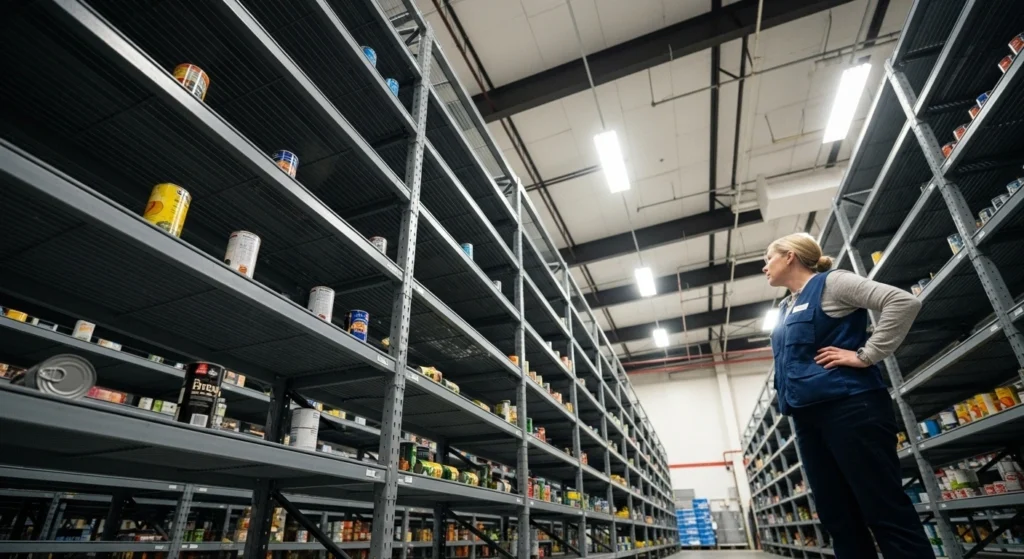
Minnesota’s emergency funding comes as food shelves were already stretched thin. Last year, the state saw a record nine million visits to food shelves, a number that was already rising before the SNAP suspension .
Sophia Lenarz-Coy, Executive Director of The Food Group, a nonprofit food bank serving 200 food shelves, acknowledged the state’s $4 million is helpful but noted it “pales in comparison to this $70 million benefit deficit” .
The math is stark, for every meal a food shelf provides, SNAP provides nine . This means the charitable food system cannot possibly fill the gap left by the lapsed federal program.
Georgi Nguyen, Director of Basic Needs at Keystone Family Services, reported her organization is already reaching maximum capacity daily and being forced to turn people away. “We’re all serving individuals with great need,” she said, describing coordinated efforts among food shelves to manage the crisis .
At PRISM, a marketplace food shelf, Executive Director Michelle Ness said they are spending beyond their budget. “Food shelves honestly cannot absorb this heightened level of need,” she stated .
Grassroots Fundraiser Efforts Mobilize
As systems strain, community-driven fundraiser initiatives are emerging to fill the gaps.
Greater Twin Cities United Way has seen an 82% increase in food-related calls to its resource helpline. The organization is providing small grants to food shelves and coordinating food donations .
The Good Acre, which works with local farms, is fundraising to sustain its Farm to Hunger Relief program, which buys produce from farmers for hunger relief programs. “SNAP is a vital lifeline for everybody in our community, and should be there for everybody in our community, farmers included,” said Executive Director Theresa Schneider McCormick .
Local businesses are also stepping up. Arya Cafe in south Minneapolis has become a community collection hub for nonperishable food items. “On a daily basis, we consistently see individuals that come into Arya to use the bathrooms, ask for a drink and water. Arya has a fund that everyone pours into, we don’t deny them anything,” said business strategy partner Asia Mohamed .
Nearby, Asian Duck Cafe is providing free fried rice on certain days and donating leftover fresh bread. Co-owner Mary Slater, a former WIC recipient, said, “We might not have a lot of money, but we have a lot of heart” .
National companies are also contributing. DoorDash is delivering one million free meals to food bank partners and waiving fees for SNAP recipients, while Gopuff is offering a $50 credit for SNAP-eligible items in November .
How You Can Support the Fundraiser Response
With the situation evolving daily, community support is critical. Here are ways to help:
Donate to Food Shelves: Financial donations have the greatest impact because food shelves can purchase food at wholesale prices, stretch your dollar further, and buy culturally appropriate and fresh foods . Consider launching a workplace or community fundraiser to support them.
Organize a Food Drive: Local businesses like Arya Cafe are proving that community collection hubs can make a difference .
Volunteer: Food shelves need extra hands to manage increased distributions.
Advocate: Contact federal representatives to urge a resolution to the shutdown and restoration of SNAP benefits.
As Shannon Smith Jones of Greater Twin Cities United Way noted, “We’re collectively all in this, whether we acknowledge it or not” . For hundreds of thousands of Minnesotans, the community’s fundraiser response represents hope on an empty plate.