Climate Crisis Crumbles the Alps : 100 Evacuated as Austrian Valley Buried Under Mudslide
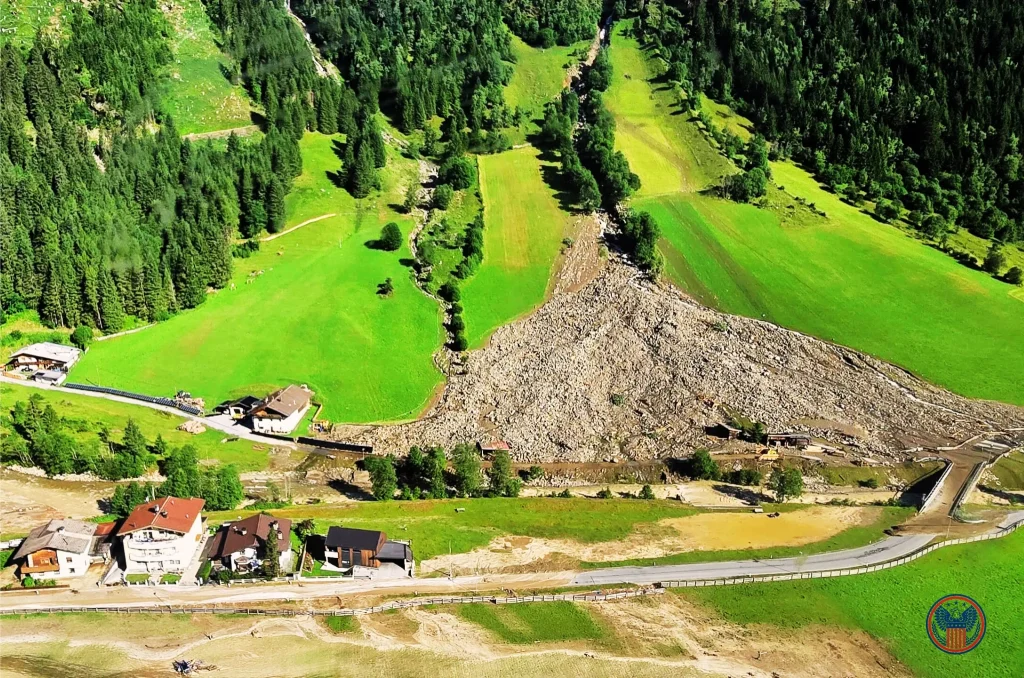
GSCHNITZ, TYROL, AUSTRIA—When thunderclouds swallowed the Alps on Monday evening, Lukas Braunhofer knew trouble was coming. As commander of Gschnitz’s fire brigade, he’d watched glaciers retreat and slopes soften for years. But nothing prepared him for the wall of mud that slammed into this 200-person village at 6 p.m., swallowing streets and homes like quicksand. “The mountains just fell apart,” he told Austrian broadcaster ORF, voice cracking. “The Gschnitzbach creek exploded like a bomb”.
By Tuesday, Austria’s military was airlifting terrified residents to safety.
The Unfolding Disaster
Torrential thunderstorms on July 1 triggered multiple mudslides in the Gschnitztal valley, a popular hiking region southwest of Innsbruck. Within hours, debris-choked floods:
Buried 15+ homes and critical roads under meters of sludge
Smashed a historic open-air museum dedicated to Alpine watermills
Isolated three mountain huts (Bremerhütte, Innsbruckerhütte, Tribulaunhütte), stranding hiker
“The landslides cut off every hiking trail. We couldn’t even walk out if we tried,” said Elmar Rizzoli, director of Tyrol’s Crisis Management Center .
Helicopters Over Headwaters
As daylight broke Tuesday, Black Hawk helicopters thudded through valley fog, plucking nearly 100 residents and tourists from rooftops and high-altitude shelters. Soldiers rappelled into mud-choked zones to secure evacuees, some clutching pets and medication bags.
Why helicopters? All access roads vanished overnight. “The valley is a tomb of mud and rocks,” one pilot told DW News
🔴 Live Impact Map
Location
Damage
Evacuees
Gschnitz village
Homes flooded, museum destroyed
60+
Bremerhütte hut
Trails blocked, power out
15
Tribulaunhütte hut
Structural damage suspected
12
Innsbruckerhütte
Food/water running low
11
“The Glue Is Melting”: Climate Science Behind the Collapse
This disaster isn’t isolated. Just eight weeks earlier, 300 people fled Blatten, Switzerland before 9 million tons of glacier ice and rock buried the village. Scientists see a lethal pattern:
Thawing permafrost: Ice once cemented Alpine rock faces. Now, 10% of Tyrol’s glaciers vanish per decade.
Extreme rainfall: June storms dumped 300% above-average rain on Tyrol, priming slopes for collapse.
“The ice was the glue of these mountains,” said Thomas Figl, Tyrol’s chief geologist, after a 100,000-cubic-meter rockslide tore off the Fluchthorn peak on June 11. “As that glue melts, the Alps crumble”
By the Numbers: Alpine Instability
3,399 meters: Height of Fluchthorn peak before its June collapse
50+: Mudslides/rockfalls in Tyrol since January 2025
0: Fatalities in Gschnitz—thanks to rapid evacuations
Voices from the Mud
For Eva Müller, 68, watching her family’s watermill museum vanish felt “like losing a child.” The museum chronicled 400 years of water management—now reduced to splinters. “We knew floods, but not mountains dissolving,” she said from a Red Cross shelter.
Rescuers distributed satellite phones to those awaiting airlift, advising:
“Stay indoors. Avoid basements. If you hear rumbling, climb higher.” — Official emergency alert
Austria’s Uphill Battle
Rebuilding Gschnitz could take years. But deeper threats loom:
Relocation risks: Some villages may be “too dangerous to reinhabit,” warns Rizzoli.
Early-warning gaps: Sensors missed Gschnitz’s slide due to poor coverage.
Cross-border tensions: Switzerland and Austria now spar over shared glaciers’ collapse risks.
Yet hope persists. After the 2023 Brenner Pass landslide, Tyrol installed 200 slope monitors. They alerted 12 villages before slides this June—saving hundreds
The Human Price of Melting Mountains
As evacuees sipped hot chocolate in Innsbruck gyms Tuesday night, Braunhofer surveyed his buried fire trucks. “We train for fires, not climate tsunamis,” he sighed. Outside, rain tapped fresh scars on the hills—a sound like ticking clocks.
Because in the Alps, the next deluge is always forecast.