Dutch Government Collapses as Wilders Withdraws Over Asylum Policy Deadlock..
Caretaker Cabinet Takes Charge Amid Political Turmoil; Elections Set for Autumn
The Breaking Point
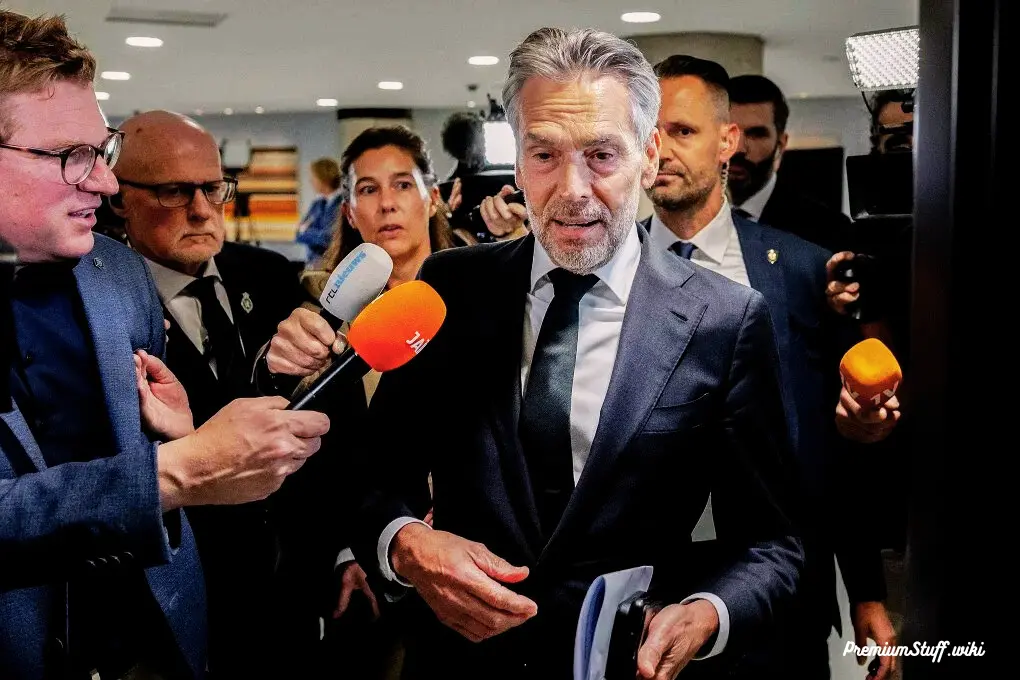
In a dramatic move that plunged the Netherlands into political chaos, far-right leader Geert Wilders withdrew his Party for Freedom (PVV) from the ruling coalition on June 3, 2025, triggering the collapse of Prime Minister Dick Schoof’s government. The rupture stemmed from Wilders’ ultimatum that his coalition partners, the conservative VVD, centrist NSC, and populist Farmer-Citizen Movement (BBB) adopt his hardline 10-point asylum plan. When they refused, Wilders declared: “No signature for our asylum plans. No adjustment of the coalition agreement. The PVV is leaving the coalition”.
The contentious proposals included closing Dutch borders to asylum-seekers, halting family reunifications, deporting Syrian refugees, and using military forces at borders—measures legal experts deemed potentially unlawful. Wilders, whose PVV won a surprise victory in the 2023 elections, accused his partners of betraying voters: “I promised the strictest asylum policy ever, but that was not granted to you”.
Caretaker Government and Policy Limbo
Prime Minister Schoof, an independent appointed to lead the fragile coalition, now heads a minority caretaker cabinet comprising the VVD, NSC, and BBB. In an emergency address, Schoof condemned Wilders’ move as “unnecessary and irresponsible,” emphasizing that the country faces “major challenges nationally and internationally” requiring stability.
The caretaker administration’s powers are severely constrained:
Frozen Policies: Parliament can declare issues “controversial,” blocking non-urgent legislation. Asylum reforms not yet implemented will stall, though existing migration laws may proceed with cross-party support.
Priority Areas: Schoof vowed to maintain focus on national security, Ukraine aid, and economic resilience amid U.S. trade tensions under President Trump’s second term.
NATO Summit Unaffected: The Netherlands will host alliance leaders in The Hague on June 24, with Foreign Minister Caspar Veldkamp confirming continued military support for Ukraine, including F-16 deliveries.
Path to Snap Elections
New elections for all 150 parliamentary seats are inevitable but face logistical delays:
Timeline: A summer parliamentary recess (July 4–September 1) pushes voting likely to October–November 2025, with a new government unlikely before 2026.
Campaign Dynamics: Migration will dominate debates. Current polls show the PVV and the Green/Labor bloc (led by Frans Timmermans) tied at ~20%, setting up a polarized contest.
Wilders’ Gambit: The anti-Islam leader aims to become prime minister, betting his resignation will galvanize support. Critics argue he engineered the crisis to evade governing responsibilities.
Coalition Fury and Wilders’ Isolation
Former partners blasted Wilders for prioritizing theatrics over governance:
VVD leader Dilan Yesilgoz: “He chooses his own ego and his own interests. This is super irresponsible”.
BBB leader Caroline van der Plas: “Governing is different than threatening on social media”.
NSC’s Nicolien van Vroonhoven: “It is irresponsible to take down the government at this point”.
Opposition leaders seized the moment. Timmermans declared, “It’s time for elections,” while the Socialist Party’s Jimmy Dijk accused Wilders of “betraying the Netherlands”.
Economic and International Implications
Despite the upheaval, economists downplay immediate risks. ABN AMRO chief economist Sandra Phlippen noted the government “barely made any concrete plans” in 11 months, limiting policy disruption. However, long-term challenges loom:
NATO Spending: Dutch defense budget increases remain in limbo as the alliance presses members to meet spending targets.
EU Relations: The caretaker government retains existing positions, but migration disputes with Brussels could resurface post-election.
What Comes Next?
For the Netherlands: Wilders’ exit exposes deeper fractures in Dutch politics. His refusal to compromise alienated potential allies, making future coalition building, even if PVV wins again, more arduous. As Schoof somberly warned lawmakers, “The last thing we want now is postponement, but it is unavoidable”.
For Europe: The collapse underscores far-right parties’ struggle to transition from protest movements to governing forces. With France’s National Rally and Germany’s AfD facing similar tests, the Dutch crisis becomes a cautionary tale of populism’s limits in power.
Timeline of Key Events
Date
Event
Significance
Nov 2023
PVV wins elections; coalition talks begin
Wilders’ anti-immigration platform gains record support
Jul 2024
Schoof sworn in as PM
Four-party coalition takes office after months of negotiations
May 2025
Wilders issues asylum ultimatum
10-point plan demands border closures, deportations
Proceeds as planned; Dutch support for Ukraine reaffirmed
Oct-Nov 2025
Expected elections
Campaigns to focus on migration, stability
Analysis: A Self-Inflicted Wound?
Wilders’ resignation reflects a calculated risk. Having watched PVV’s poll numbers dip from 23% (2023) to 20%, he reignited his core issue migration to mobilize voters. Yet his tactics may backfire: by collapsing the government over policies his own asylum minister failed to advance, he exposed the PVV’s ineffectiveness in power.
As the Netherlands braces for months of uncertainty, Schoof’s caretaker cabinet embodies a nation in holding pattern, governing but not steering, reacting but not building. The coming election will test whether Wilders’ bet on public anger outweighs voters’ craving for stability. For now, the Dutch political landscape lies fragmented, its compass spinning.